
The assignment
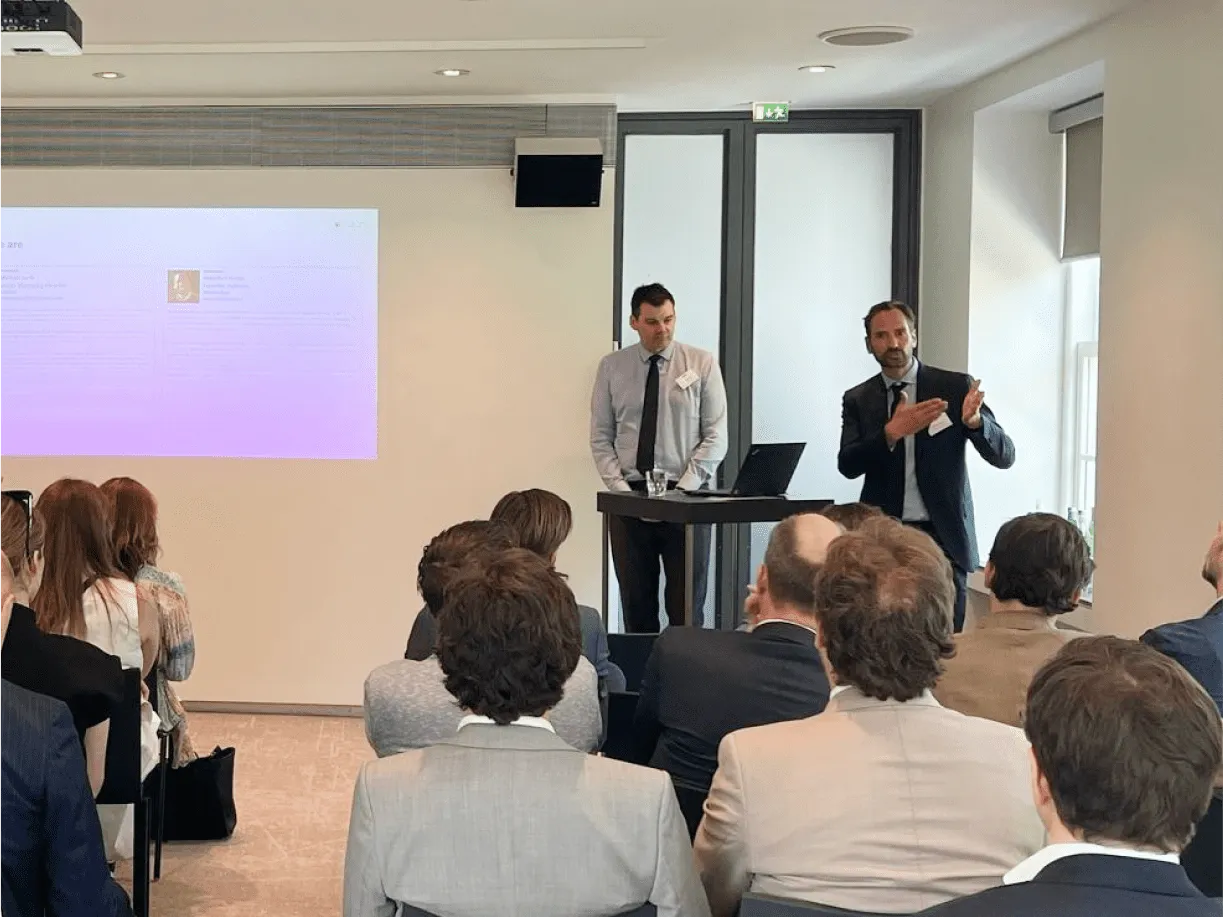
Third year co-tutoring Legal Design in Litigation at Utrecht University with Associate Professor of competition law Jasper Sluijs. The format hasn’t changed because it works.
Students work in teams on landmark CJEU competition law cases: Qualcomm, Google Shopping, Super League, Booking.com, Google Android. Each team gets a specific audience. Compliance teams, LLM students, national competition authorities, company boards, academics at a conference.
The assignment is simple and hard at the same time: make this judgment accessible for that audience.

What the students made
Seven teams, genuinely creative concepts. A board game explaining the Super League case. A training module on predatory pricing thresholds for product managers at a microchip company, complete with gamification. A visual breakdown of the As-Efficient-Competitor test for LLM students.
One team coined “How low is too low?” as a slogan for predatory pricing. Hard to improve on that.
The mid-term correction
Halfway through, we do a group feedback session. Every team presents their progress. The designs look good. The substance is solid. And the feedback is almost always some version of the same question.
One team made a board game explaining the Super League case to national competition authorities. The game is rigged, which captures the legal argument perfectly. Great concept. But under what circumstances will an NCA official sit down to play a board game?
The answer wasn’t to scrap the game. It was to zoom out. The board game isn’t the product. A workshop for competition officials is, and the board game is the centerpiece.
Here’s why that works: participants play the game first. They lose. Every time. Because the game is rigged, which is exactly the legal argument in Super League. By the time you get to the theory, you’ve already felt the unfairness. That’s not decoration, that’s a design choice. The lived frustration makes the legal reasoning land differently than a summary ever could.
But that only works inside a workshop. A board game on someone’s desk is a curiosity. A board game in a facilitated session where you debrief the experience afterward? That’s a compliance tool.
Same pattern with a predatory pricing training module. Nice gamification, solid on substance. But compliance training works against the user’s own incentives. A sales associate doesn’t want to learn why their pricing might be illegal. Once the team started thinking about that tension, the design got sharper.
This is the moment it clicks for most teams. The substance was never the problem. The design often wasn’t either. The missing piece was the context: where does this person encounter your work, and what are they thinking when they do?
The question that keeps coming back
Law students are trained to master substance. Get the legal reasoning right, structure the argument, cite correctly. That’s what they’re good at. Shifting from “is this correct?” to “will this person actually use this?” is a different mode of thinking entirely.
It’s the same thing we see with lawyers in practice. The analysis is often excellent. The communication assumes the reader thinks like the writer.
That’s the core question legal information design keeps coming back to. Not “does this look good?” Not even “is this clear?” But: will the person on the other end actually do something with this?