“Harvey or Legora?” The question usually comes after a firm has seen two demos. Both were impressive. Both looked alike. And nobody quite remembers where the difference was.
I am not going to tell you which one is better. I do not know, and whoever says they do has not measured it on your work. What I can explain is what to look at, and how to find out yourself.
Power and appliances
An image that helps. A language model is power. A few companies generate it: OpenAI, Anthropic, Google. An appliance uses that power and does something with it. Harvey, Legora and LegalMike are appliances on the same power.
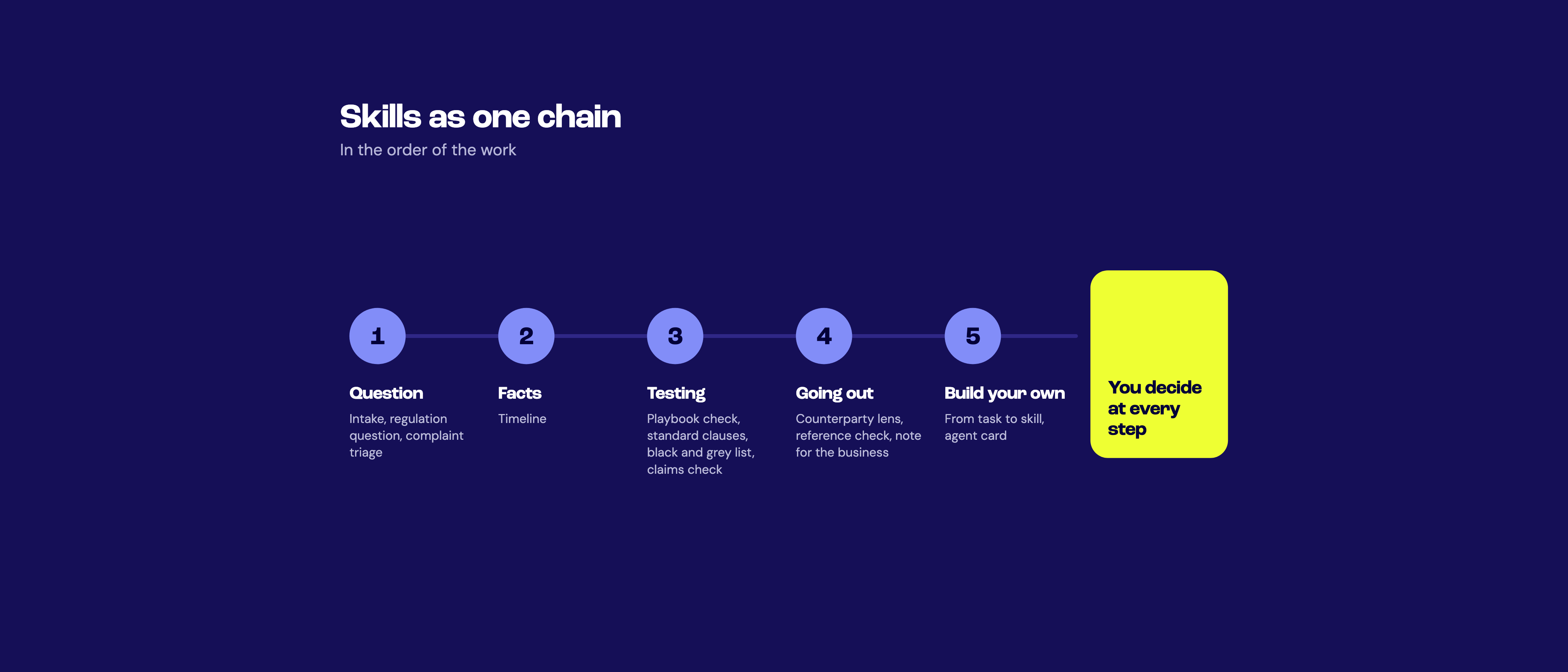
That is not a reproach. They are not thin wrappers around ChatGPT. The value of such a platform is in what sits on top: which data it takes from a document, how it classifies risk, which steps it follows and which sources it works with. That is real work.
But it does explain two things. Why the demos look alike: same power. And why the question is shifting. The makers of the models now deliver appliances for lawyers themselves. For a platform, the supplier becomes the competitor. What is a distinctive feature today may be in the model itself in six months.
So the question is not which platform is best. The first question is which problem you have. The second is which part of that layer you buy, and which part you make yourself.
Where the difference is
Not in the reasoning about one clause. There a general model and a legal platform are close, because it is the same engine. But the engine does not make the car. The difference sits in three places.
The sources. Legal research and working with the documents of a matter are two different crafts. Comparing a contract with your own positions is something a general model does well, and you can check the answer yourself. Searching legislation and case law is something else: there the risk is an invented source, and there you pay for the database behind it.
The fit. Permissions per matter, a log of who asked what, the link to your document management system, the result back in Word. Those are properties of the system around the model, not of the model.
The guidance. A team that leads the rollout, ready-made ways of working, someone you can call. A senior partner is not going to tinker.
There is a fourth reason firms buy, and it is less technical. What I hear from firms: a specialised platform gets past the risk committee and the insurer in one meeting. Contracting directly with the maker of a model often does not. That is a legitimate reason. It is just not a reason that says anything about the quality of the answer.
A demo is not a measurement
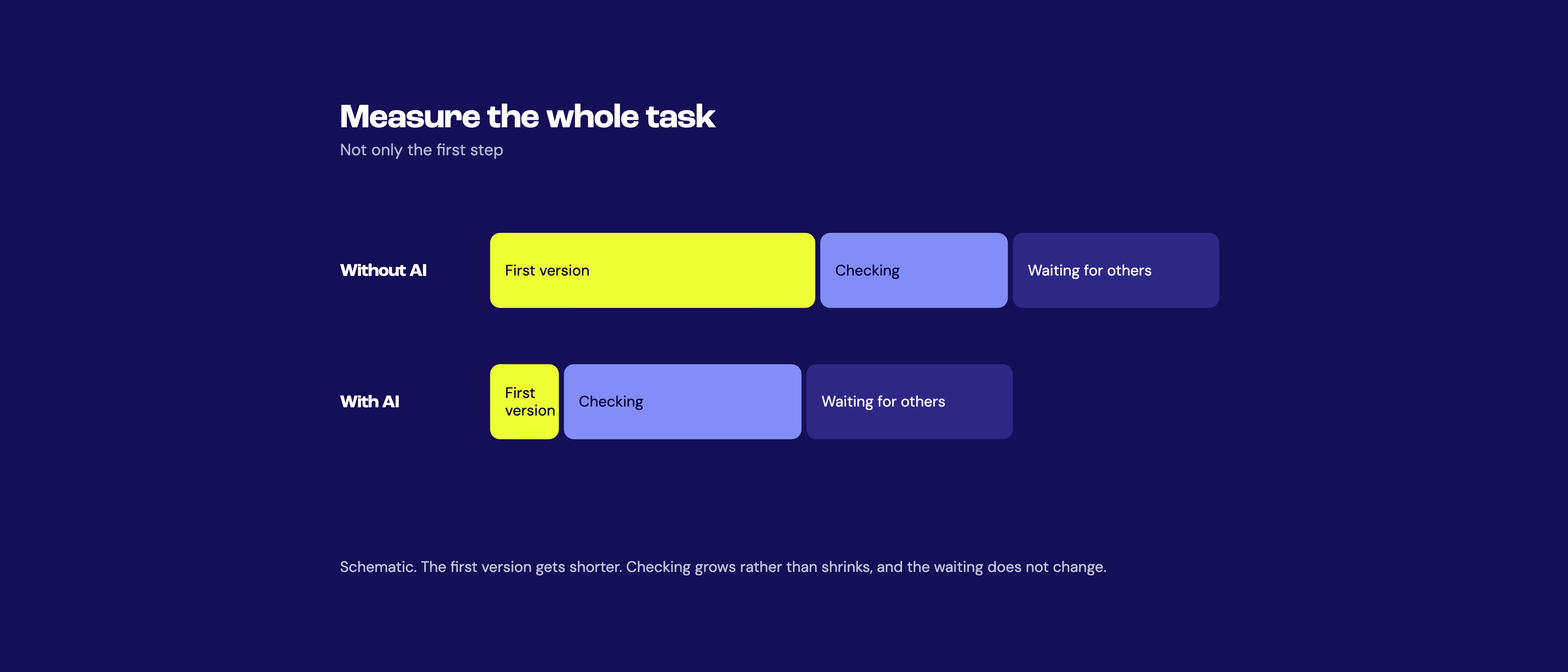
In a demo the vendor picks the task. The document is clean, the question fits, the answer is right. Your own work is never that clean.
Anna Guo of LegalBenchmarks measures differently: tasks from practice, an answer by a lawyer next to them, and reviewers who do not know which answer is whose. In demos she hears that a tool built for lawyers is always more accurate. In her two measurements, legal and general tools were close on accuracy. She measures two other things as well: how usable an answer is, and what the platform adds to the way of working.
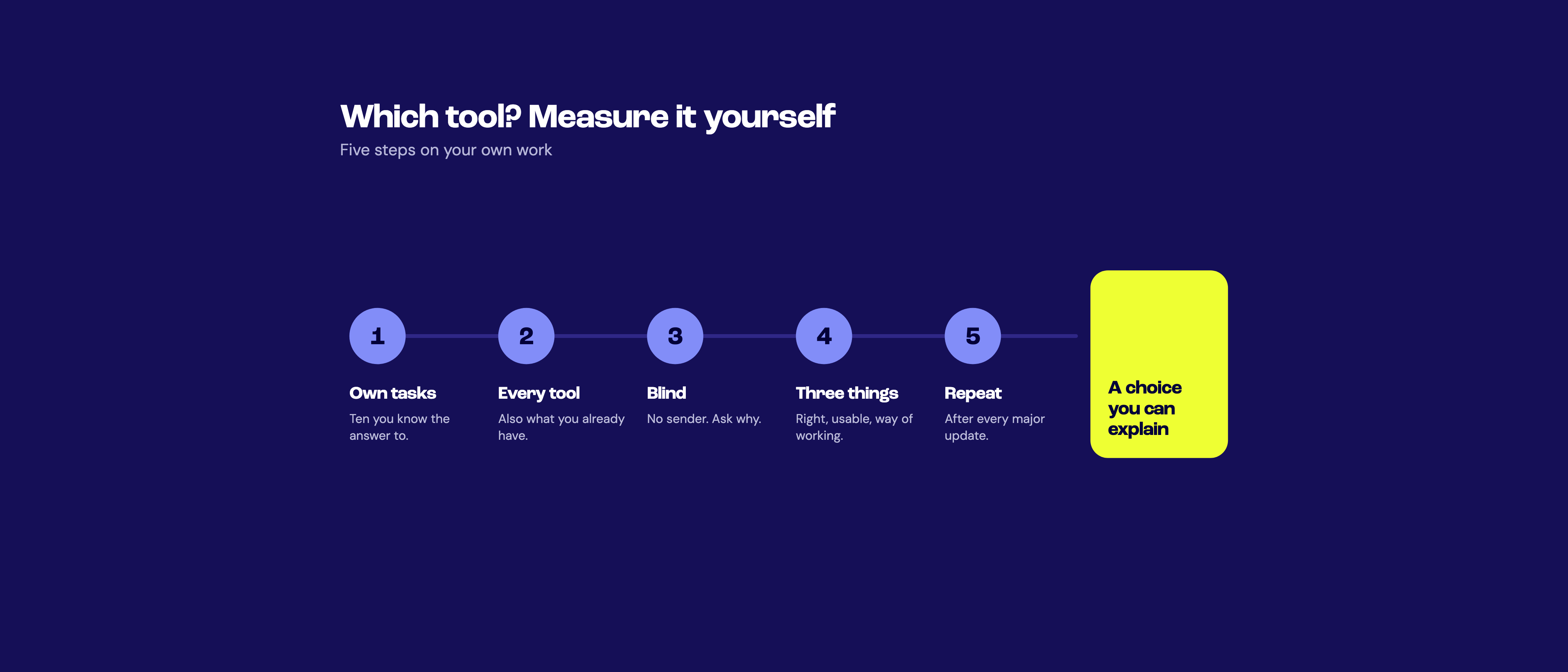
You do not have to take her numbers. You can take her design. On a small scale, a team can do this itself.
1. Take tasks from your own work
Ten tasks the team really does, to which you know the right answer. Reviewing an NDA, drafting a clause, getting a date out of a messy contract. Take out what identifies the client.
Do not use invented questions from a chatbot. And include hard tasks. On an easy task every tool does well and you see no difference.
2. Run them in every tool, including what you already have
The candidates, and Copilot or Claude with a good instruction. Often what you already have gets further than you thought. Sometimes not, and then you know what you are paying for.
3. Have them judged blind
Put the answers side by side without a sender. Let two or three colleagues rank them and say why. The why matters most: it shows what your team means by a good answer.
Put an answer by a lawyer in between. Guo did that with a request to draft a clause on discussing prices with resellers. The legal tool asked questions and pointed to a competition law risk. The lawyer wrote the clause as asked.
4. Look at three things separately
- Is it right? Does it match the document and the law?
- Is it usable? A long answer that touches everything scores high on completeness and can still be less usable than one good sentence.
- What does the platform add to the way of working? Does the result come back in Word, can the team share it, does it sit where the work already happens?
Do not add them up to one number. Which of the three weighs most differs per team.
5. Repeat it
The tools change every few months. Keep your ten tasks and run them again after a major update, and before you renew a contract. The Dutch bar advises firms the same in its recommendations on AI: your own test set, and no reliance on a vendor’s demonstration.
Seven questions buyers wish they had asked
Performance is one part of the choice. The rest is rarely in the demo.
- How much setup does it take with our own templates? Not with the clean samples from the demo. A contract tool is as good as the playbook you put into it. From teams that did it, I hear that making that playbook takes tens of hours.
- Who maintains the playbook? You or us, and what happens when a position changes?
- What is the price after year one, and once we really use it? The market is moving from a fixed amount per user to paying for usage. Ask what a review of a hundred contracts costs. If you cannot recalculate the answer, keep asking.
- How many firms our size use it every week, and how many renew? A vendor’s valuation says little. Usage and renewals say more.
- Who leads the rollout after the pilot? A licence nobody logs into does not pay for itself. The buyer and the user are often not the same people.
- What happens to our data when we leave? And what do we take with us: documents, prompts, ways of working? See also May a lawyer use ChatGPT?
- Can we test for a few months first? Do not sign a year’s contract on a demo. Test on real deadlines and messy facts.
You need your playbook either way
It is not a choice between buying and building. From the largest firms I hear that they do both: they buy a platform and build next to it what fits their own practice.
The foundation is the vendor’s, and so are the standard recipes. What no vendor can make for you is your recipe: your own positions per clause, your own way of working. You have to write that down whichever platform you choose. Keep it in plain files that are yours, and it moves with you when you switch. A good test for any tool: does what we have built still work if this vendor is gone tomorrow?
How to make such a playbook is in AI contract review: why it needs your playbook.
One caveat: we do not sell a platform and we build in whatever a team already has. That colours this article. But you can do the measurement yourself, and then you do not have to believe me.