Case study

Shortlist: which ten issues do you put to a country?

To prepare one country review, members of the UN committee on women's rights (CEDAW) read 150,000 words or more. With Vice-Chair Corinne Dettmeijer-Vermeulen we built Shortlist. It sorts those documents and shows the source behind every point. Which questions the Committee asks is up to the members.
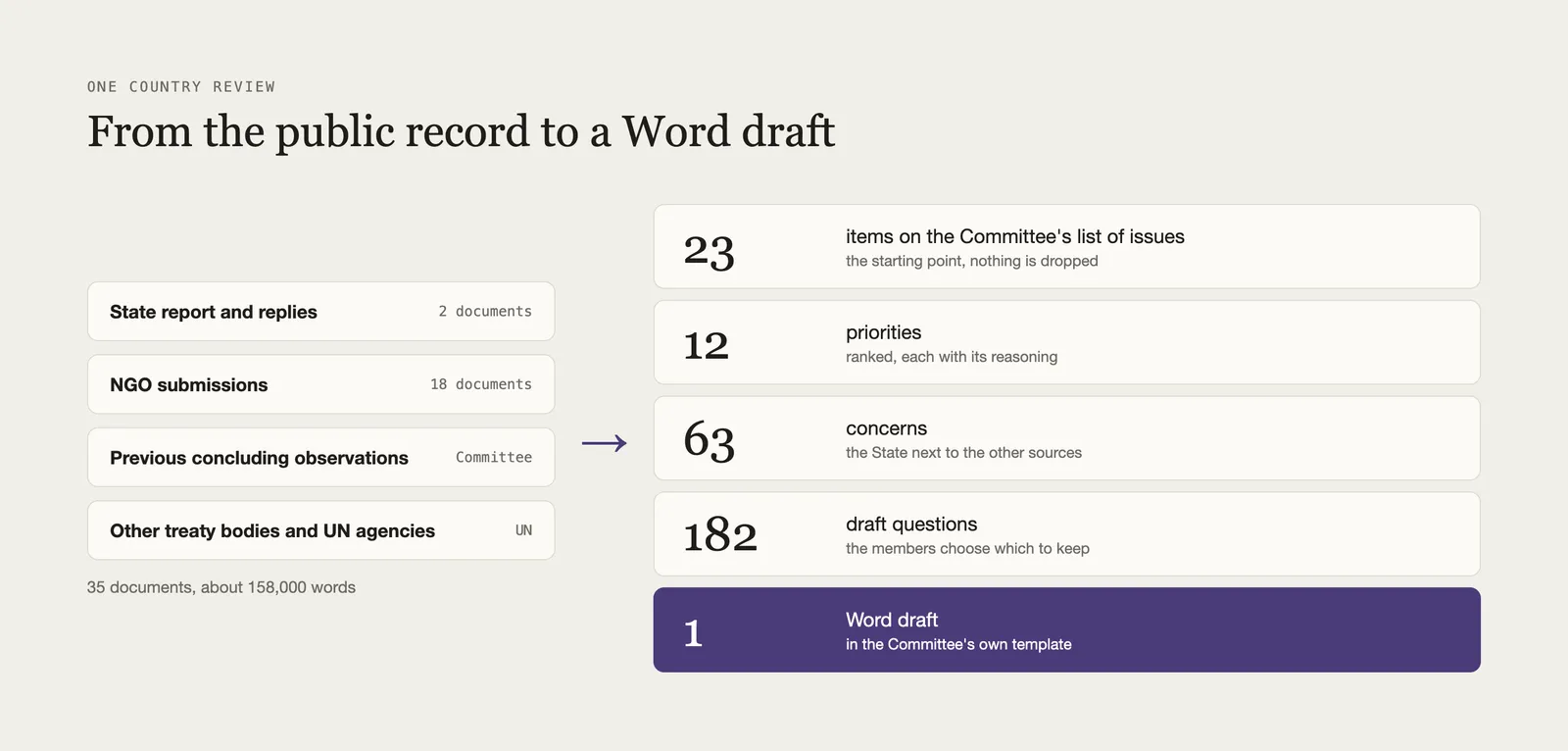
From the public record to a Word draft: 35 documents, 23 items, 12 priorities, 63 concerns, 182 draft questions

Members of the CEDAW Committee · November 2026

Every few years a country sits across from the UN committee on women’s rights in Geneva for a few hours. A task force of members prepares. They read the State’s report, its replies to the Committee’s list of issues, the last recommendations, what other UN bodies found, and the NGO submissions. For some countries that’s seventy of them.

The list of issues has around 25 points, and the dialogue has room for a handful. Corinne Dettmeijer-Vermeulen, Vice-Chair of the Committee and for years the Dutch National Rapporteur on Trafficking in Human Beings, asked a simple question in our first call: which ten issues matter most, and what do we ask about them?

A task force member said in that same call: the tool can sort, but the Committee does the writing. That’s still how Shortlist works.

Shortlist became a closed web app. A lead uploads the public documents for one country and runs the analysis. For the review of Viet Nam that was 35 documents, about 158,000 words. Out came 12 priorities, 63 concerns and 182 draft questions, and all 23 points on the list of issues are in there.

The order is a suggestion. Each priority says why it ranks where it does, and members can also sort by Convention article or move things by hand.
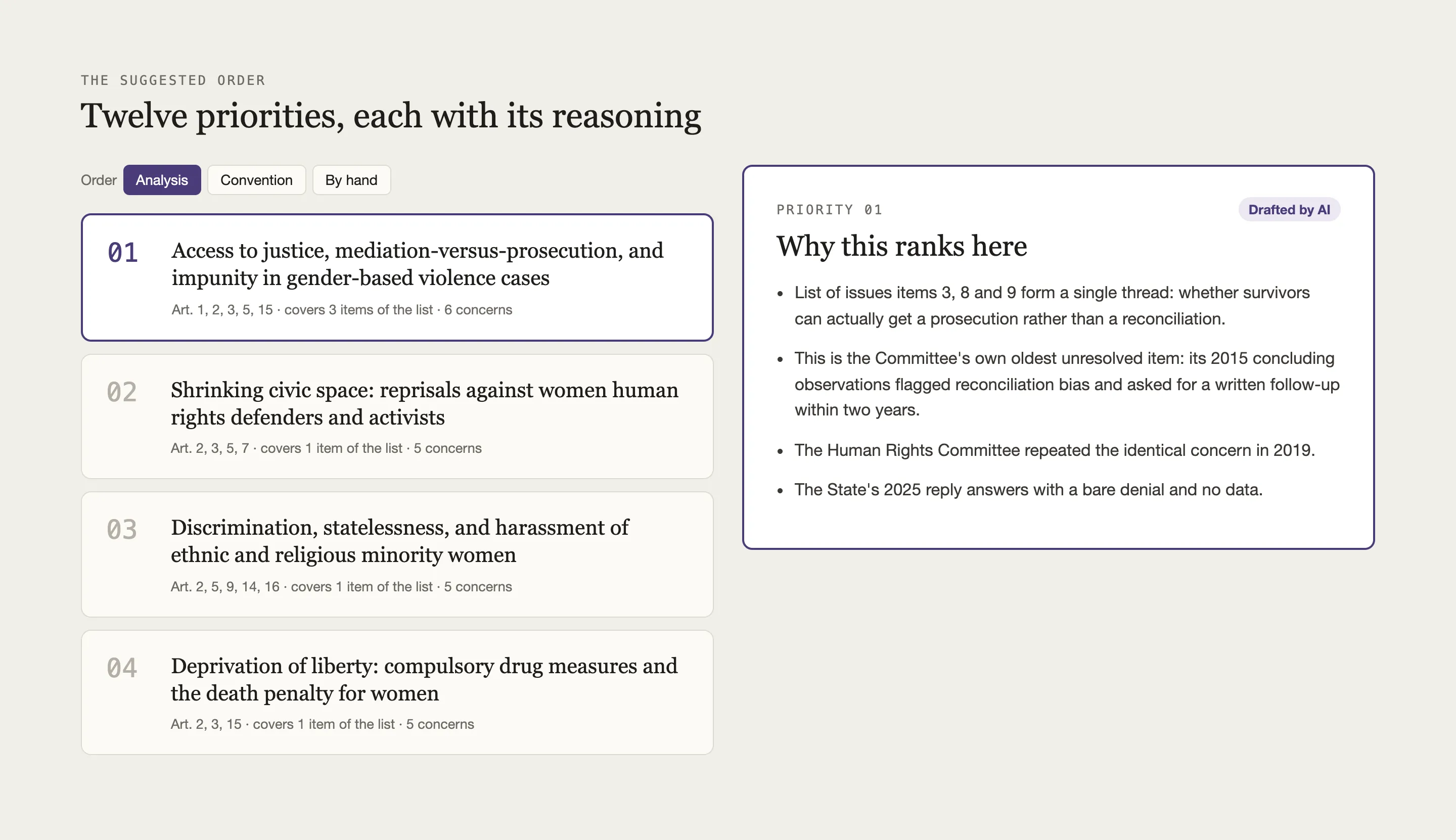
The suggested priorities, with the reasoning for the first one
The suggested order, and for each priority why it ranks there. Rebuilt with text from the review of Viet Nam, like the visuals below.

Each concern puts the State’s account next to the other sources, with the exact passage. Take mediation in domestic violence cases. In 2015 the Committee asked for a report on it within two years. In 2025 the State replied in one sentence. Shortlist puts the two side by side.
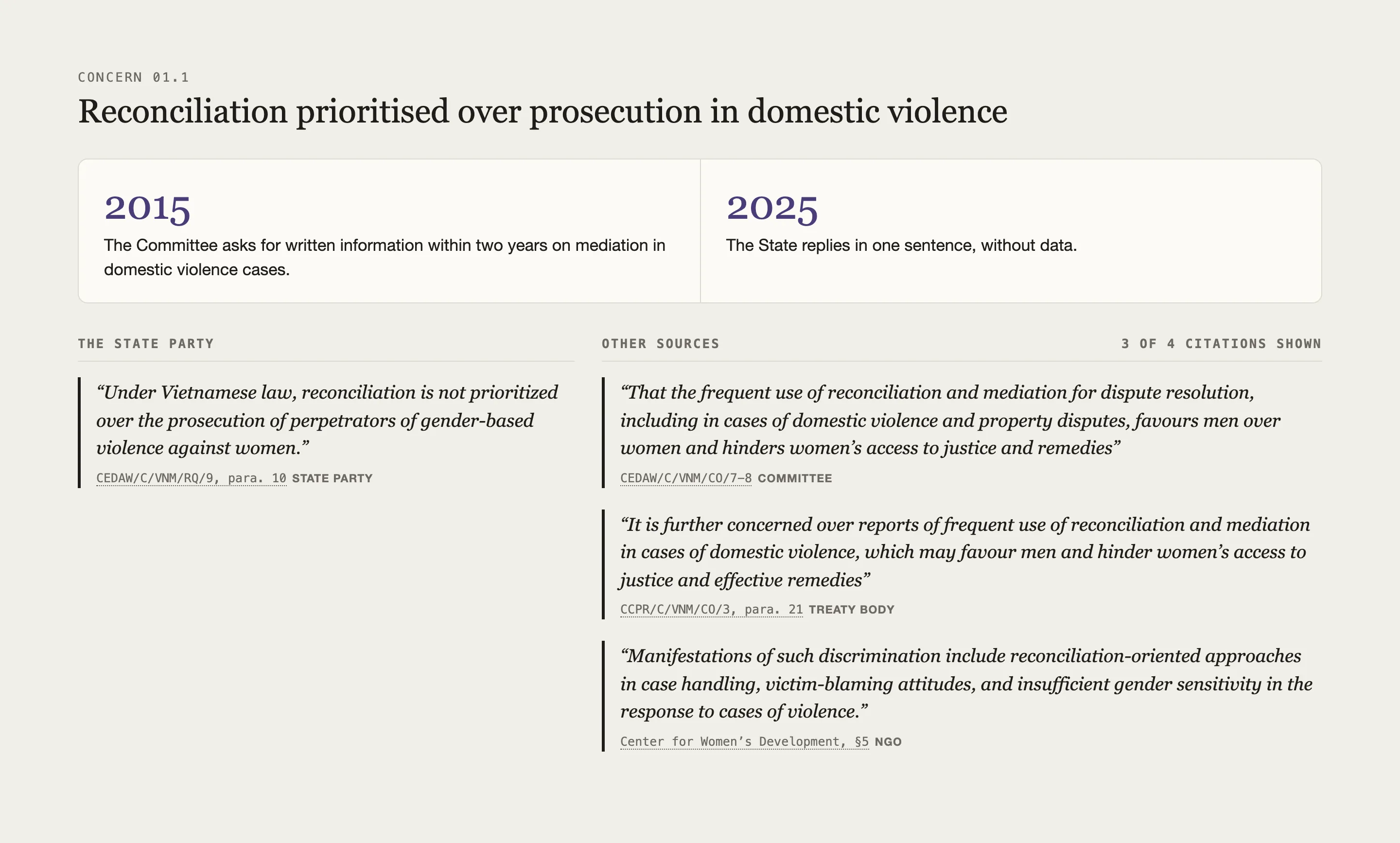
One concern: the State next to the other sources, with the 2015 request and the 2025 reply
The State on the left; the Committee, the Human Rights Committee and an NGO on the right. Every quote with its reference.

On our first walkthrough we couldn’t tell a question written by the AI from a quote. So now every piece of text says what it is. Quotes are checked word for word against the source, and a second check reads each statement against its quotes. If it doesn’t fully hold, it stays in, with a note.
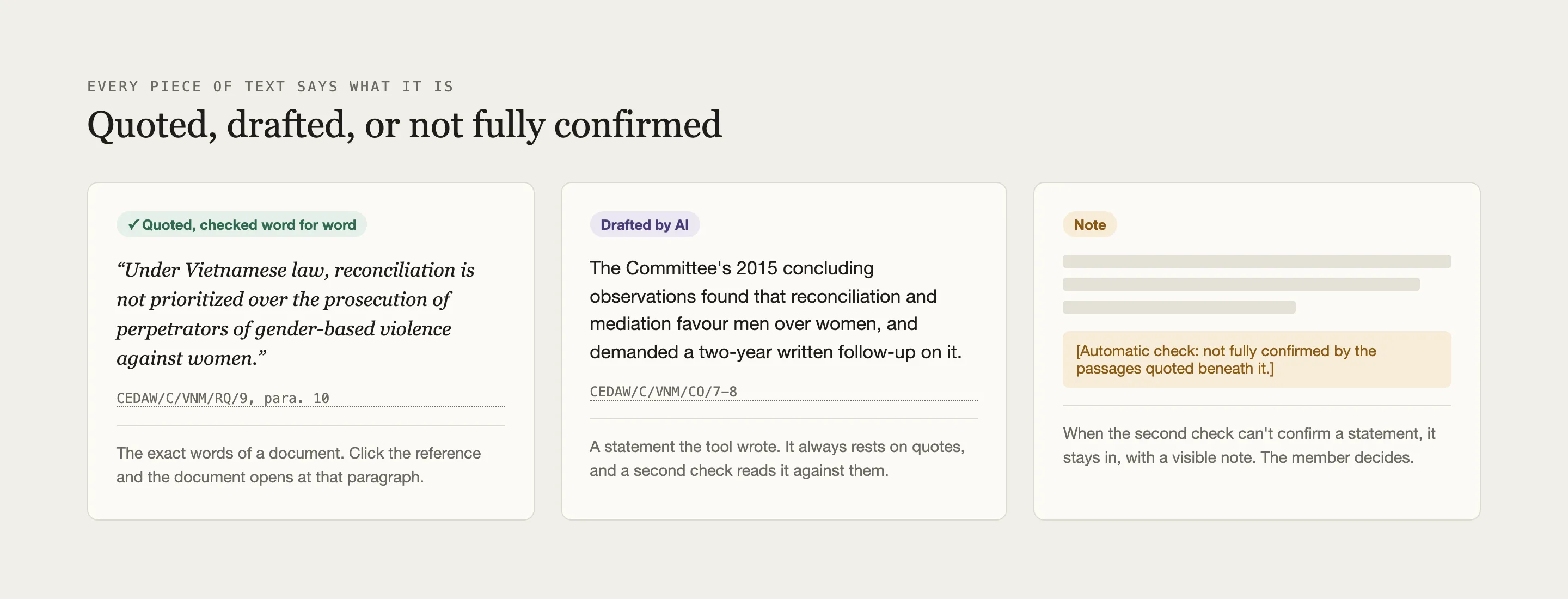
Three kinds of text: quoted, drafted by AI, or not fully confirmed
Quoted, drafted by AI, or not fully confirmed. It always says which.

The first version also labelled every source: critical or state-aligned. We took that out. One report can echo the State on one point and not on the next. And which NGO to trust isn’t a call for a tool. Now a source is only named for what it is: State, NGO, human rights institution or UN body.

Members don’t write in Shortlist. They choose. A star for the questions they want to open with, the rest goes. The text itself stays as it is, so it never says more than the documents do. Then comes an export to Word, in the Committee’s own template. A member with one priority exports just that one.

Only public documents go in. What members hear in their meetings with NGOs they add themselves, in Word.
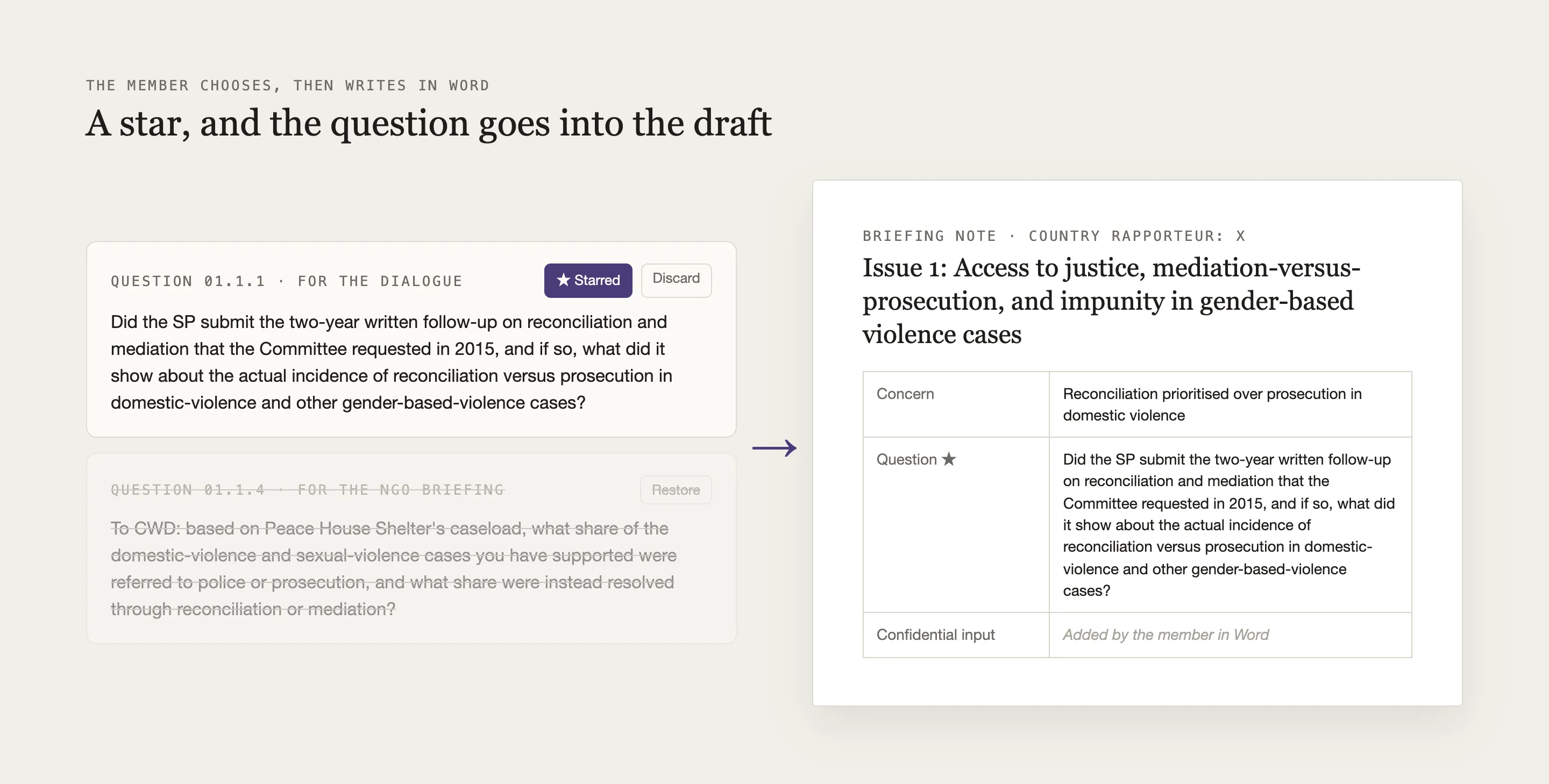
A starred question goes into the Word draft, a discarded one does not
A star, and the question is in the draft. Anything confidential the member adds in Word.

We tested Shortlist first on a review that was already done, from February 2026. Beforehand we fixed 14 points the tool had to find, without tuning it to that country. It found all 14. The one thing the human team found and the tool didn’t wasn’t in the documents we had.

Then a small group of members used it for a real review, in October 2026. One of them had written down her own concerns and questions first. When she put them side by side, the main lines were the same.

Shortlist is an initiative of Corinne’s, made with Patroon and members of her task force, in their personal capacity. It’s not an official tool of the Committee or the UN. Corinne brings the knowledge of the Committee, we bring the design and the technology.

Through Corinne we met Domenico Zipoli of the Geneva Human Rights Hub. With GHRH we’re looking at whether more committees can use it, since the other treaty bodies work in much the same way. On 3 November 2026 we showed Shortlist at a GHRH roundtable with OHCHR. On 18 November Vlad presented it with a CEDAW member at the RightsX Solutions Festival.

AI sorts the information. The judgement is the members’.
Get in touch

Plan a call, no strings attached. We are happy to think along with you.

Maurits Fornier - Co-founder

Maurits Fornier

Co-founder

More projects

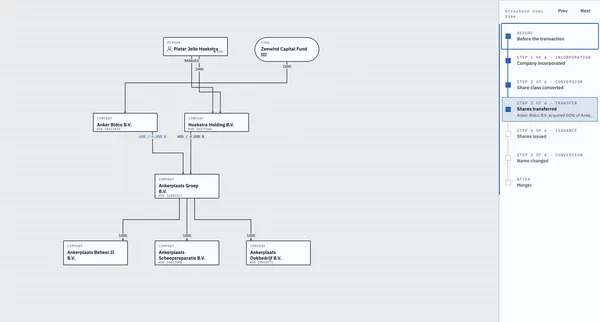
Lucy halfway through a deal: step 3 of 6, a new bidco takes 60 percent (made-up companies)

Corporate and transaction lawyers

Lucy: a structure chart where you see where every line comes from

Legal TechAI ToolsInformation Design
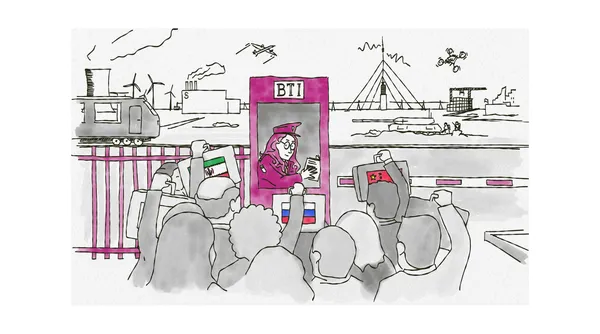
Illustration of a customs checkpoint with a queue of foreign investors carrying briefcases, vital Dutch infrastructure in the background

Van der Heijden Institute

The customs officer of Dutch business

IllustrationInformation Design
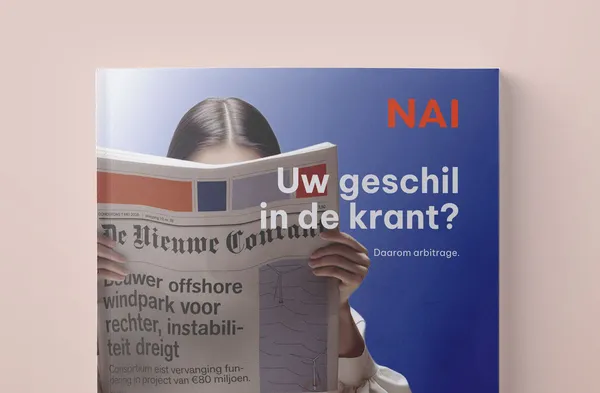
Why Arbitration campaign visual

Netherlands Arbitration Institute

That's why arbitration: the same dispute, twice

Campaign ConceptVisual DesignLegal Content Design
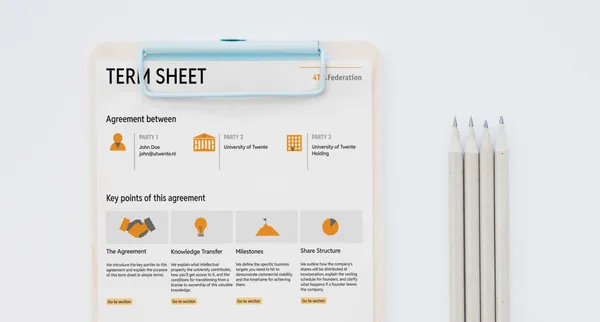
Termsheet template for university spin-offs

4TU

A term sheet that explains why it looks the way it does

Contract DesignLegal Content Design
Thea - Multi-view case analysis

Legal professionals

Thea: from text to timeline

Legal TechAI ExtractionVisualization
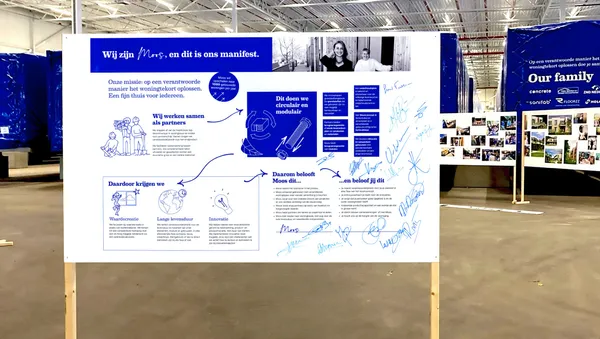
Signatures on the redesigned Moos contract

Moos

A construction contract with less text and more pictures

Contract RedesignLegal Content DesignContract UX
Interactive session during the conference in Utrecht

Ministry of Economic Affairs

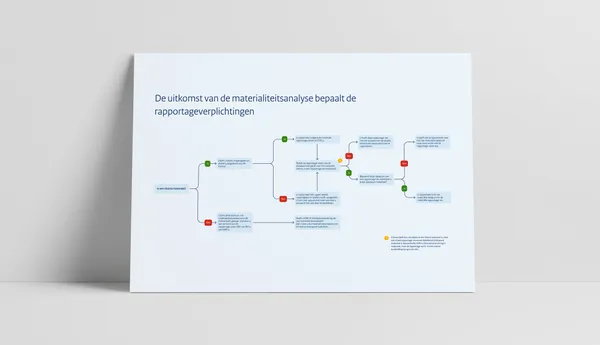
The ESRS Navigator: sustainability rules, explained with a made-up company

Information DesignLegal Content DesignInteractive Guides
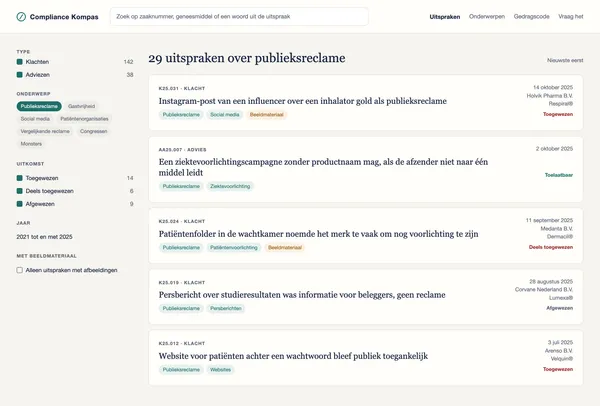
Overview of rulings on advertising to the public, with filters for type, topic and outcome (rebuilt with made-up rulings)

Legal team of a pharmaceutical company

Every ruling on pharmaceutical advertising, searchable and in the same shape

Legal TechAI ToolsInformation Design
Interactive session during the conference in Utrecht

Dutch Legal Tech

The Dutch Legal Tech Map

Information DesignBrand IdentityLegal Content Design
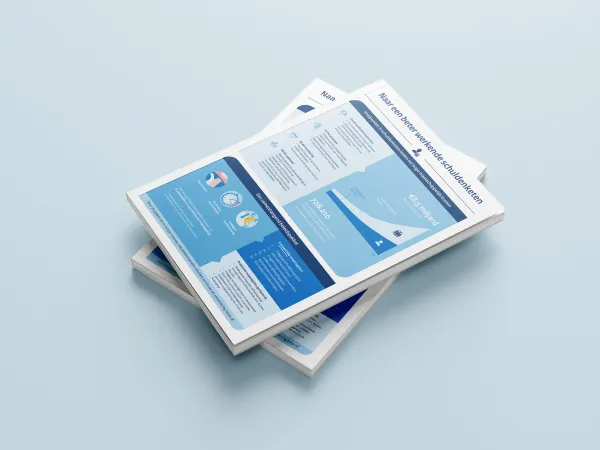
Minister Schouten (Poverty Policy, Participation and Pensions) sent Parliament the final report of the Interdepartmental Policy Research (IBO) on Problematic Debt, 'Towards a Better Working Debt Chain'.

Dutch Government

The debt system, made visible

Information DesignLegal Content DesignLitigation Visuals
Feitlijn - Case law visualized

Legal Professionals

Feitlijn: the core of a ruling, pulled from the text

Legal TechUX DesignData Visualization
Interactive session during the conference in Utrecht

Municipality of Utrecht

A privacy statement that starts with the resident

Information DesignLegal Content Design
Visualization of MH17 legal procedures

MH17 Foundation

The MH17 trial in pictures, for relatives and the public

Information DesignBrand IdentityLitigation Visuals
Privacy policy visualization

LC Energy

A contract for the kitchen table

Contract RedesignContract UX