Advertising for medicines in the Netherlands has its own code of conduct, with its own committee that rules on complaints and gives advice. What you can and can’t do is in those rulings. They’re online, in a database with a basic search. And they’re long.
The legal team of a pharmaceutical company wanted to see quickly what had been decided before on a topic. An influencer’s post, a leaflet in a waiting room, a congress. Until then that meant: search, open the PDF, read, next.
So we built a closed web app with all the rulings. AI reads each ruling and puts it in the same shape: the core in a few sentences, the ad in question, what the complainant and the respondent said, the decision, the articles, a timeline and the lesson for practice. The full ruling is always right there.
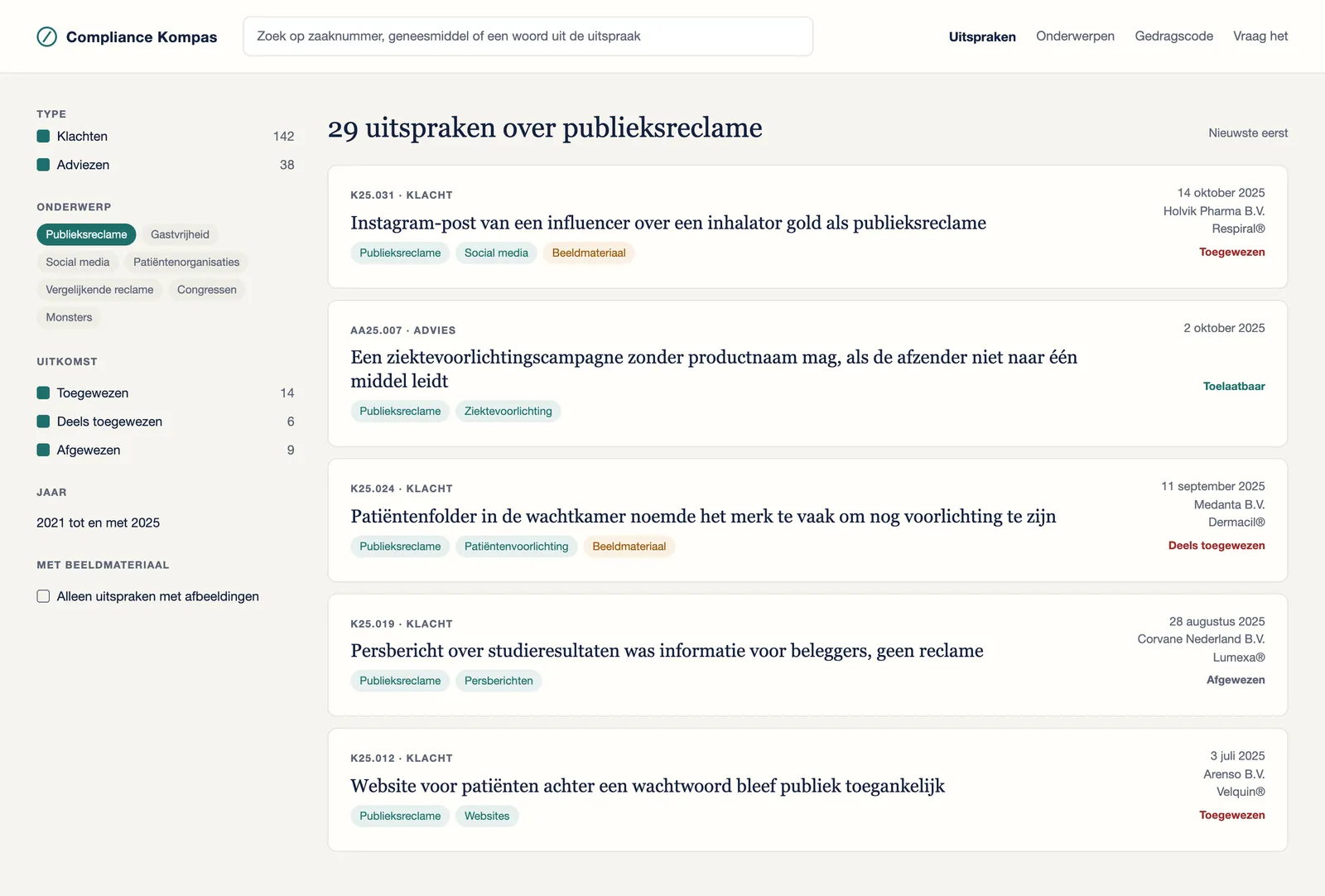
You filter by type, topic, company and outcome. And because search also runs through the source texts, you can always find a ruling.
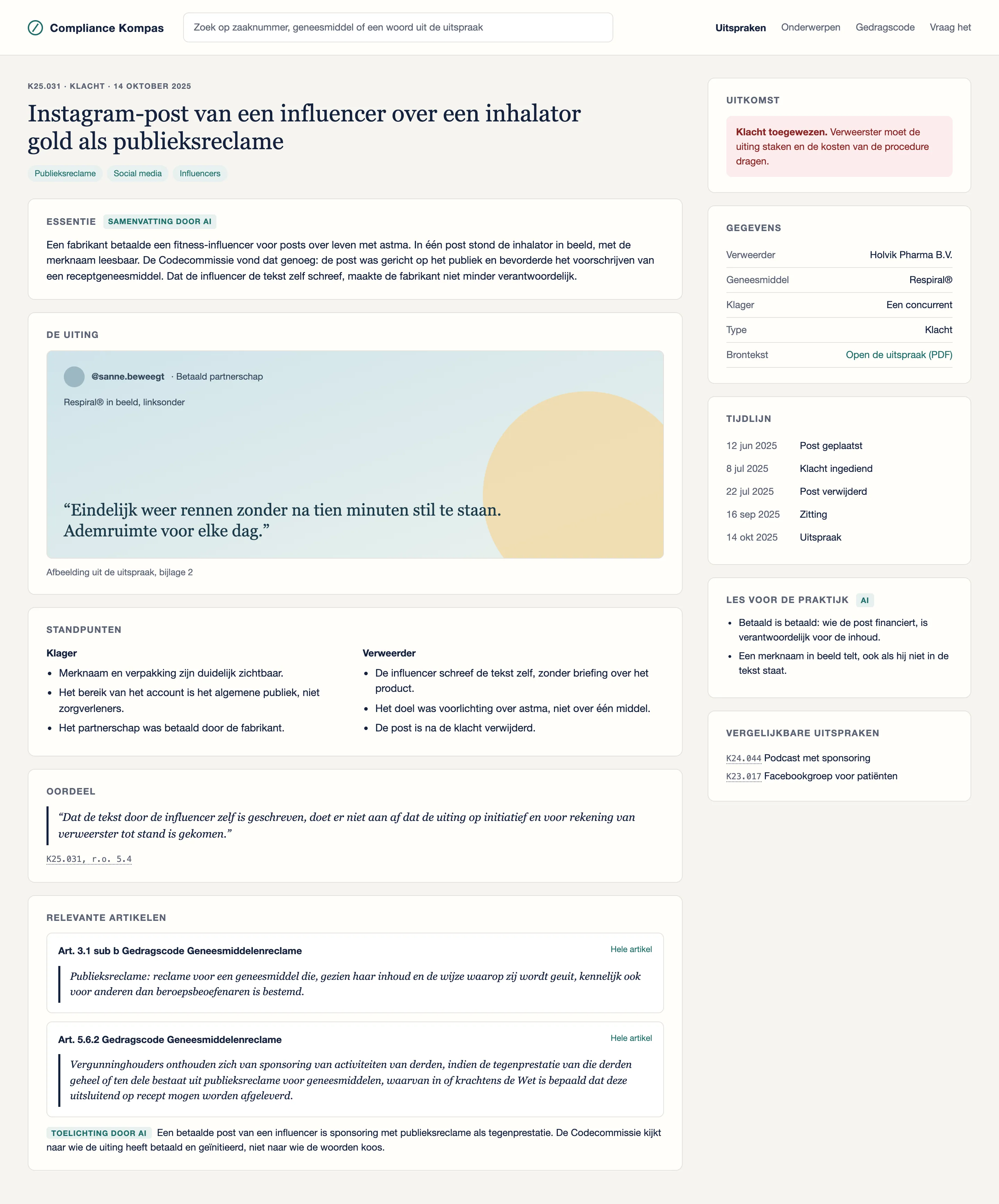
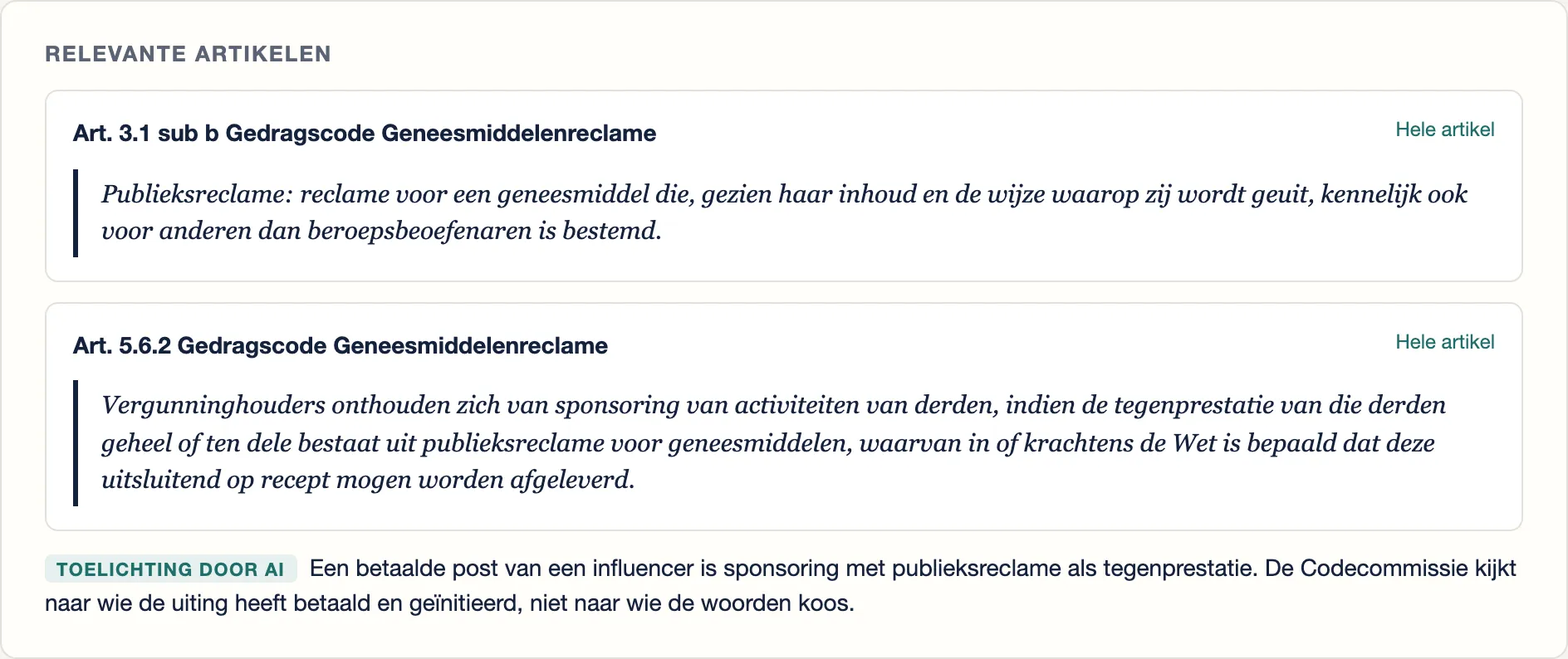
The code itself is in there too. Each ruling shows the articles it mentions, with the literal text. For a definition, only the term that matters, not the whole list.
That last part came out of the first test round. The team sent back a list of points. On the summaries they were brief: exactly the information you need. The main point was about the articles. First the literal text, then the AI’s explanation. In this field you often apply the exact words, and a summary of a rule isn’t the rule.
The other points: the search bar on every page, the case title on the case page itself, and no company or medicine fields for advice, because those are always anonymous. And the images: a ruling with the ad attached is rare, but that’s exactly when you want to see it.
We built it in four two-week sprints. The instructions to the model went through eight versions, from a free summary to a fixed schema with word limits and an instruction to quote literally where possible. For questions across all rulings we connected a chat environment that answers from the same documents.
In the maintenance phase we went through the committee’s register every week, added the new rulings and spot-checked the summaries against the source.